
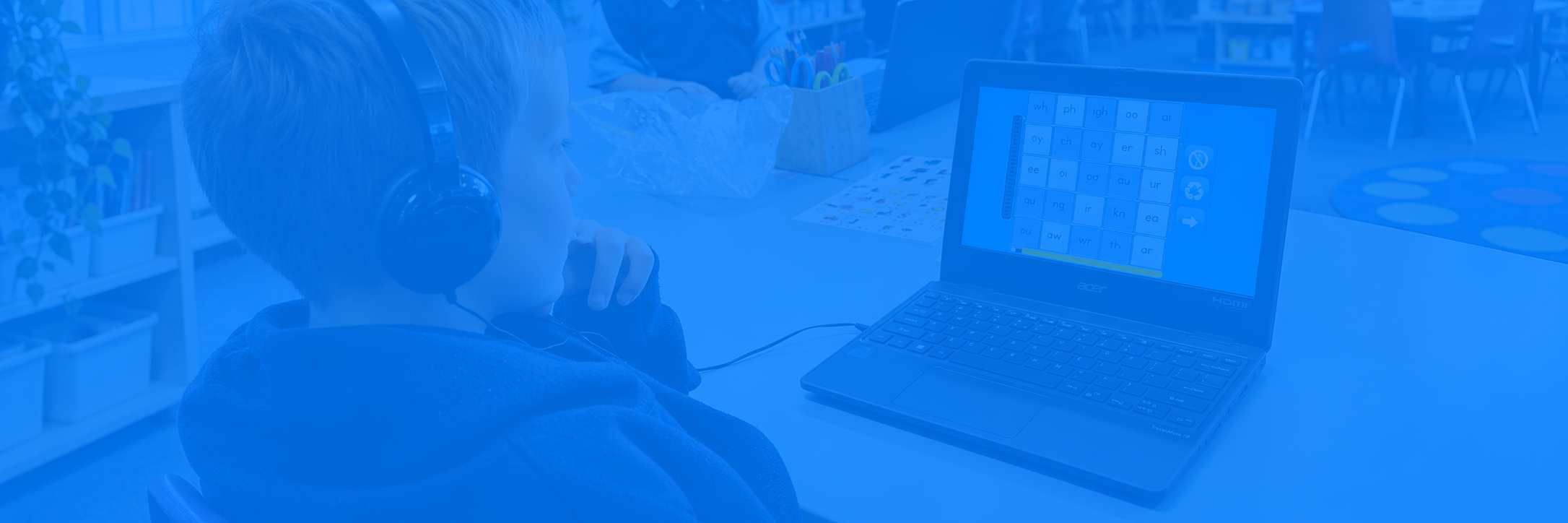
A new peer-reviewed study published in Reading & Writing Quarterly has found strong preliminary evidence supporting the reliability and validity of the ReadingDoctor® Grapheme Knowledge Test (RD-GKT), a digital assessment of children's letter–sound knowledge. The test will become available in ReadingDoctor® Online in Term 1, 2027.
The independent research, led by Dr. Emma Grace and colleagues from Flinders University, investigated whether a fully automated digital assessment could reliably measure children's knowledge of the relationships between speech sounds (phonemes) and the letters or letter combinations (graphemes) that represent them.
Published on 21 November 2026, the study compared the ReadingDoctor® Grapheme Knowledge Test (RD-GKT) with an established measure, the Letter-Sounds Test (LeST) (Larsen et al, 2015). The researchers reported strong correlations between the two measures, suggesting that the RD-GKT can be a useful digital tool for assessing and monitoring children’s letter-sound knowledge.
Why assess grapheme knowledge?
Knowledge of the relationships between speech sounds and written letters is fundamental to learning to read and spell. Children need to learn how individual letters, such as m and s, and letter combinations, such as sh, ai and igh, represent the sounds in spoken words.
Although brief screening assessments can identify children who may be experiencing difficulties, more comprehensive assessments can help educators identify precisely which letter–sound correspondences children know and which require further teaching. Traditionally, these assessments have required teachers or clinicians to work individually with students, presenting letters and recording their spoken responses. This can be time-consuming, particularly when assessing entire classes or monitoring progress regularly.
Introducing the ReadingDoctor® Grapheme Knowledge Test
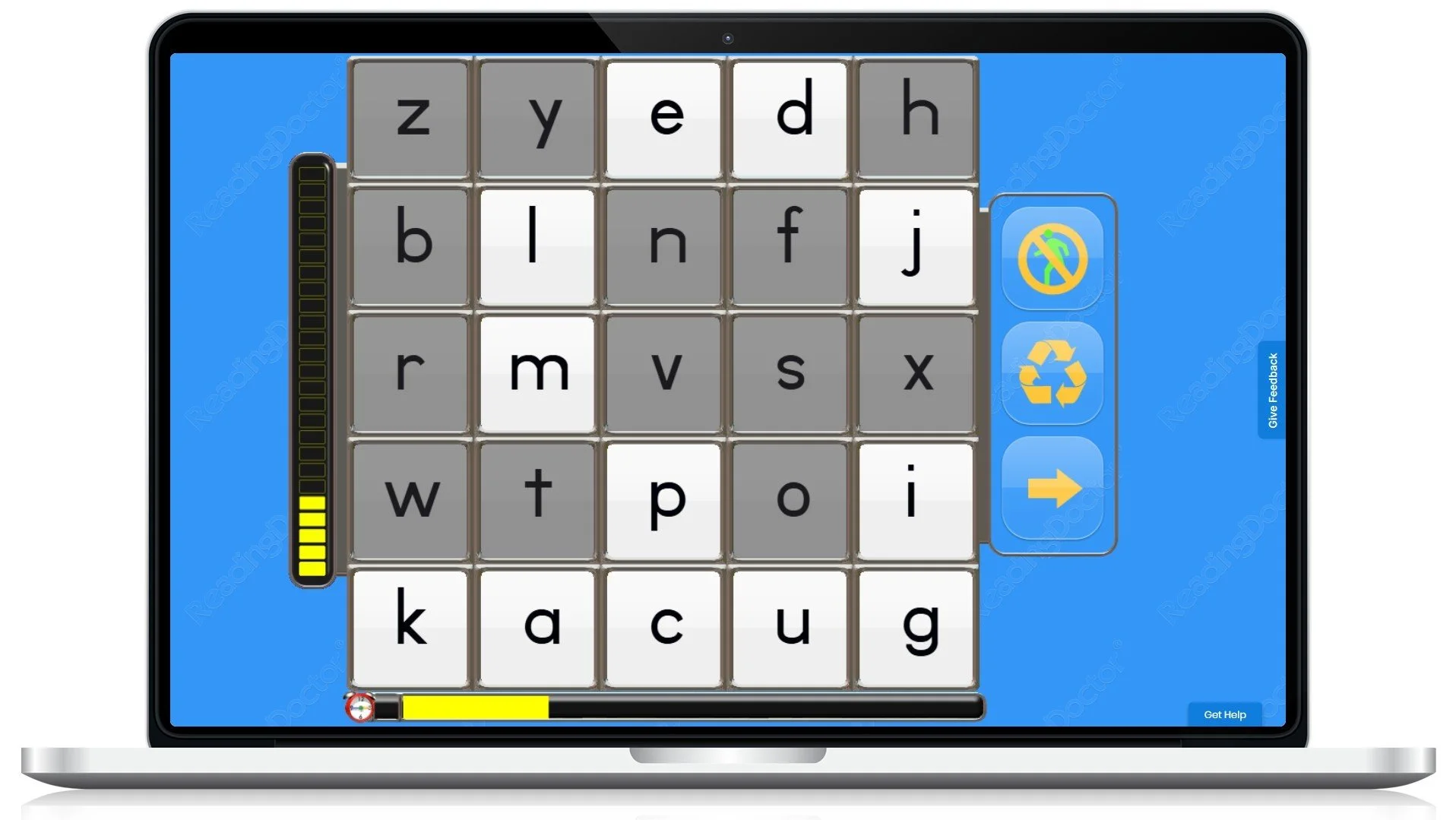
The ReadingDoctor® Grapheme Knowledge Test (RD-GKT) was developed to provide an efficient, automated way of assessing children's knowledge of up to 50 single-letter and multi-letter graphemes.
Unlike conventional assessments in which children look at a grapheme and say its sound, the RD-GKT presents a spoken sound and asks children to select the corresponding grapheme from 12 options displayed on a screen.
The assessment includes several features designed to support efficient administration:
Automated administration and scoring, reducing the need for individual examiner-led testing.
Adaptive progression, allowing children to progress from single-letter to more complex graphemes according to their performance.
Automatic discontinuation rules, limiting unnecessary testing when children experience difficulty.
Detailed reporting, allowing educators to examine individual children's knowledge of specific graphemes and review class-level results.
Digital delivery, enabling assessment using a computer or iPad.
These features have the potential to make comprehensive grapheme knowledge assessment more practical for schools and other educational settings.
What did the researchers find?
The researchers compared children's performance on the RD-GKT with the established Letter–Sound Test (LeST; Larsen et al., 2015).
The initial validation study involved 21 children aged approximately 4–7 years. A smaller group of 12 children completed follow-up assessments approximately 8–11 weeks later.
The results were very encouraging:
Excellent internal reliability: The RD-GKT demonstrated very high internal consistency (Cronbach's α = .97), indicating that its items consistently measured the underlying skill.
Strong agreement with an established assessment: Total RD-GKT scores were strongly correlated with LeST scores (r = .91). Correlations were particularly strong for single-letter graphemes (r = .93), with a substantial association also found for longer graphemes (r = .79).
Evidence of predictive validity: Children's initial RD-GKT scores were strongly associated with their performance on the LeST approximately eight weeks later (r = .78), suggesting that RD-GKT scores reflect meaningful differences in children's grapheme knowledge.
Preliminary age-based reference data: In a separate sample of 797 Australian children aged 4–7 years, researchers collected additional assessment data and reported preliminary score distributions and percentiles across different age groups.
The researchers concluded that these findings provide preliminary evidence supporting the RD-GKT as a reliable and valid digital assessment of phoneme–grapheme correspondence knowledge.
While the findings are very positive, the authors emphasised that further validation with larger and more diverse samples is needed, particularly to investigate its use for screening and monitoring progress over time.
“Findings from this study provide preliminary evidence supporting the RD-GKT as a reliable and valid digital assessment of PGC knowledge for 4–7-year-old Australian children. Findings from the separate sample of 797 children, including children with and without reported learning difficulties, provides evidence of feasibility of administering the assessment at scale under naturalistic home and school conditions.”
What could this mean for schools and clinicians?
The findings suggest that digital assessments such as the RD-GKT may help overcome some of the practical challenges associated with assessing foundational reading skills. For teachers, automated administration and scoring could make it easier to assess students efficiently and identify gaps in their letter–sound knowledge. For speech pathologists and literacy specialists, detailed information about individual grapheme knowledge may help guide instructional planning and identify specific areas requiring further investigation or intervention.
The researchers also highlighted the potential for digital assessments to support early identification of difficulties within school-wide screening and multi-tiered systems of support.
Coming to ReadingDoctor® Online in Term 1, 2027
We are pleased to announce that the ReadingDoctor® Grapheme Knowledge Test will become available to ReadingDoctor® Online users in Term 1, 2027. The new assessment will complement ReadingDoctor® Online's systematic synthetic phonics teaching activities, providing educators with a research-supported way to examine children's letter–sound knowledge.
This development represents another important step in our commitment to making evidence-informed literacy assessment and instruction more accessible to teachers, clinicians and students.
Read the research
Grace, E., Gath, M., Furlong, L., Carson, K., Bell, T., & Young, J. (2026). Preliminary Validation of the ReadingDoctor® Grapheme Knowledge Test. Reading & Writing Quarterly. Published online 21 November 2026.
Read the full open-access research paper
The research was conducted independently. ReadingDoctor® provided complimentary software access but did not fund the research or participate in initiating the study, collecting data or conducting statistical analyses.
The ReadingDoctor® Grapheme Knowledge Test (RD-GKT) will be added to ReadingDoctor® Online in Term 1 2027.
Thank you to all the children, families, teachers and schools who supported this research!
Approved by Flinders University Ethics (#7442). Funded by a Channel 7 Children’s Research Foundation (now the Firefly Foundation) Early Career Grant.